AI Image Generator From Text Explained Clearly
People are getting used to typing a few words and seeing an image appear almost instantly. That still feels a little strange, even now. The appeal is obvious, though. It saves time, lowers the barrier to creating visuals, and gives both businesses and individuals a way to test ideas before spending money on design or photography.
Why text to image tools suddenly feel normal
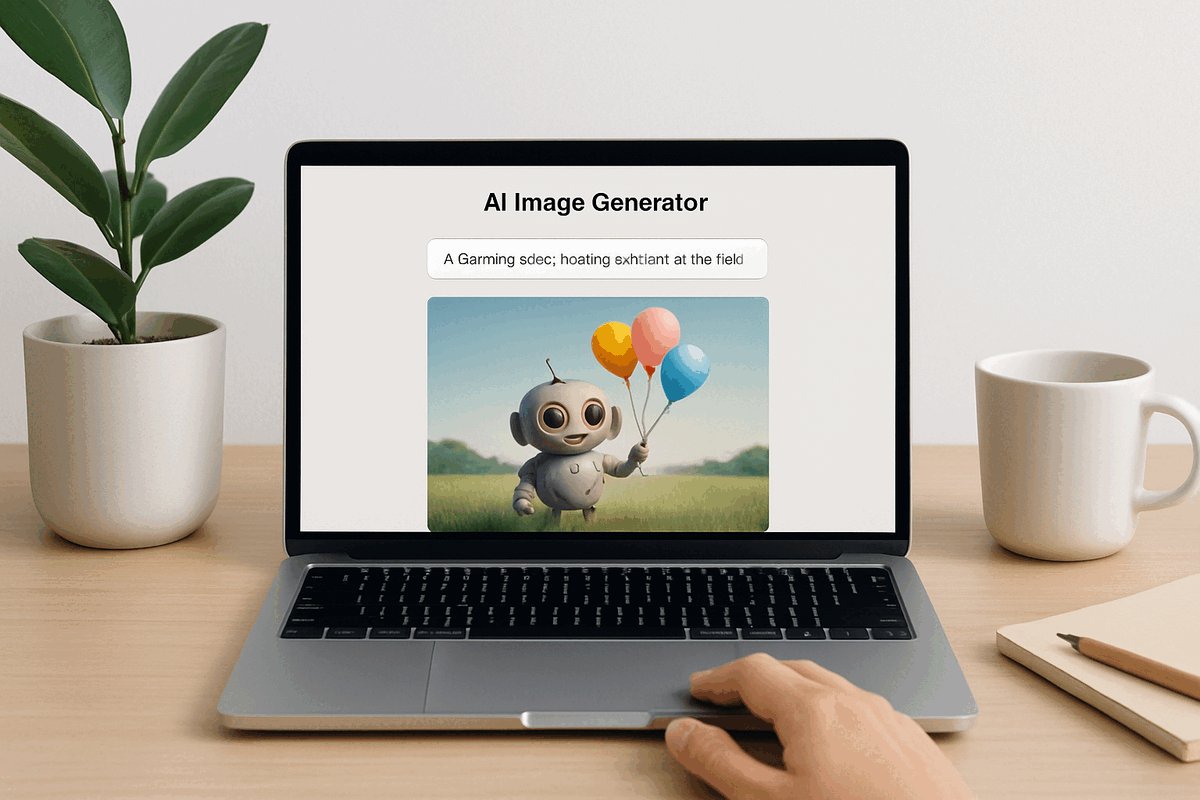
A few years ago, an ai image generator from text sounded like a niche tool for hobbyists. Now it sits in the same conversation as writing assistants, video editors, and search tools. That shift happened because the interface is simple. You describe what you want, adjust a few settings, and the system returns options within seconds.
What makes this especially van toepassing is not just speed. It is the way these tools fit into everyday work. A webshop owner can mock up banner ideas. En a local service business can test visual styles for social posts. A student can turn a rough concept into something easier to discuss.
The phrase text to image generator sounds technical, but the use case is often practical and ordinary. People want a fast way to explore visual ideas without waiting on long design cycles. That same need for speed is also showing up in content marketing, where businesses want more output without agency fees, delays, or rigid monthly limits.
How an AI image generator from text actually works
At a basic level, the tool reads your prompt and predicts what kind of image matches those words. It has learned patterns from very large image and text datasets. So when someone types “modern bakery interior with warm light and wooden shelves,” the model connects those words to familiar visual features and assembles a new image.
That does not mean it understands the world in the human sense. It is better to think of it as pattern recognition at scale. The stronger the prompt, the more direction it has. Style, lighting, camera angle, color palette, and composition all help shape the result.
This is why the best ai image generator is often not the one with the biggest name. It is the one that responds well to the level of control you need. Some users want quick concept art. Others want product-style visuals, editable variations, or integration with an ai image editor so they can refine the output instead of starting over each time.
What makes a good prompt and why results vary
Many disappointing results come from prompts that are too vague. If you type “make a nice business image,” the tool has to guess. Toch if you write “clean office desk, laptop open, natural daylight, minimal style, soft shadows, realistic photography,” the model has much more to work with.
There is also a balance to strike. Too little detail creates generic images. En too much detail can make the prompt feel crowded and produce odd results. In practice, the best prompts describe subject, setting, style, lighting, mood, and format in plain language. You do not need to sound technical to get better output.
Results vary because each model has different strengths. One ai image generator online may be good at photorealism. Another may handle illustration better. Some are quick but inconsistent. Others are slower and more polished. That is why people searching for the best free ai image generator often end up comparing workflow more than image quality alone.
Where free tools help and where they fall short
The appeal of a free ai image generator from text is easy to understand. It lets people experiment without commitment. For small businesses, freelancers, and curious beginners, that matters. You can test styles, learn prompt writing, and get a feel for what these systems can and cannot do before paying for anything.
Still, free tools often come with limits. Image resolution may be lower. Commercial rights may be unclear. Queues can be longer, and branding or watermarks may appear. Some tools also restrict editing features, which becomes frustrating when one image is close but not quite usable.
This matters in professional settings because speed alone is not enough. If a marketing team needs consistent visuals for landing pages, ads, and blog posts, they also need reliable output and a repeatable workflow. The same logic applies in SEO. Saving money is useful, but consistency matters more over time. That is one reason all-in-one platforms such as SEO AutoPilot EN are gaining attention in content operations. Teams increasingly want creation, optimization, publishing, and analytics connected in one place rather than scattered across separate tools.
How AI-generated images fit into SEO and content strategy
An ai image generator from text is not an SEO strategy by itself. It becomes useful when it supports content that people actually want to read and search engines can understand. A blog post, service page, guide, or product explainer often performs better when the visuals are relevant, clear, and aligned with the topic instead of being generic stock imagery.
There is also a practical local angle here. Businesses often need visuals that reflect their own market, language, and audience. That does not mean forcing a place name into every image. It means showing relatable situations, realistic settings, and visual choices that match how people actually search and browse. A local repair service, clinic, or retailer benefits more from context than from flashy art.
Good SEO now also reaches beyond classic search results. GEO, or Generative Engine Optimization, matters because AI search tools surface content in different ways. Clear structure, trustworthy information, schema markup, and useful media all help. When image creation sits inside a broader content workflow with keyword analysis, automatic publishing, internal linking, and refresh suggestions, the gains are usually more durable than chasing isolated visuals.
What to look for before choosing a tool or workflow
It helps to ask a simple question before choosing the best ai image generator for your situation. Do you need inspiration, production, or scale. Inspiration tools are fine for rough concepts. Production tools need consistent quality and clearer usage rights. Scale requires integration with the rest of your content process.
If you publish regularly, the image tool should not live on an island. It should fit with your CMS, article planning, metadata, and publishing rhythm. This is where businesses often discover the hidden cost of using many separate tools. The software may be cheap, but the workflow becomes slow and fragmented.
That is also why many companies are rethinking expensive bureau models. Monthly retainers can be high, delivery can be slow, and output is often capped. AI does not solve every problem, but it can remove friction. When article creation, schema markup, keyword analysis, internal linking, and multi-language support live in one dashboard, teams can move faster without sacrificing structure. For Dutch-language content in particular, native generation rather than translation can make a noticeable difference in tone and relevance.
Video: Best AI Image Generators You Need to Use in 2026
Voordelen op een rij
- Speed: An AI image generator from text can turn a rough idea into a visual concept in seconds.
- Prompt quality: Better prompts usually lead to better images, especially when they include style, lighting, and context.
- Free vs paid: Free tools are useful for testing, but limits on quality, rights, and editing often appear quickly.
- SEO value: Images help most when they support useful content, clear structure, and a real search intent.
- Workflow matters: The best tool is not only about image quality but also how well it fits publishing and content operations.
- Local relevance: Visuals work better when they reflect recognizable situations and audience expectations instead of generic stock scenes.
Why this topic matters beyond design
It is easy to treat AI image generation as a novelty, but that misses the wider shift. Businesses are under pressure to create more content with fewer delays and lower costs. That pressure affects images, articles, publishing, and reporting at the same time.
Seen in that light, an ai image generator from text is part of a broader move toward connected content systems. The strongest setups do not stop at making images or writing drafts. They help teams find keywords, publish faster, add schema markup, and keep content fresh when performance drops. That is where AI becomes less about spectacle and more about steady, useful work.
A practical way to think about AI visuals
The real value of an ai image generator from text is not that it replaces every designer or solves every content problem. It is that it gives people a faster starting point. Used well, it can sharpen ideas, support SEO content, and reduce the drag of slow production. The useful question is not whether the technology is impressive. It is whether it helps you create clearer, more relevant content for the people you want to reach.